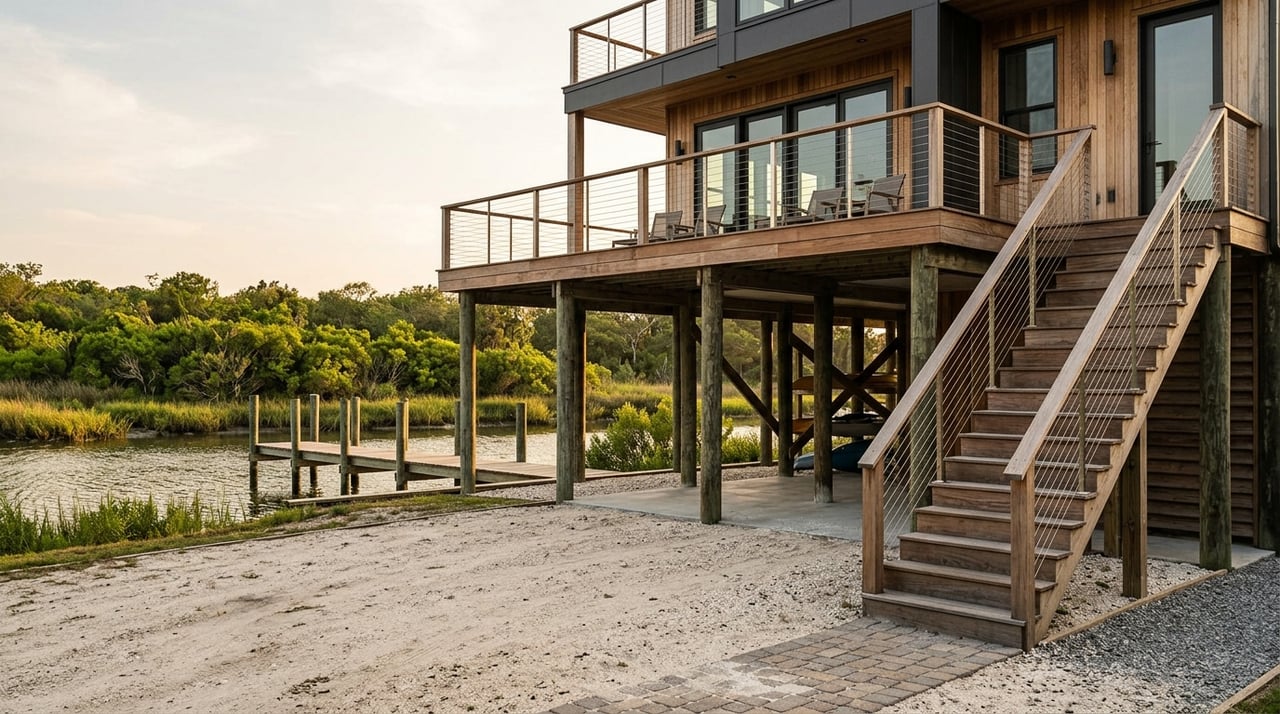
Oceanfront Or Soundside? Choosing Your Topsail Island Home
June 11, 2026
June 11, 2026
Trying to decide between oceanfront and soundside on Topsail Island? In Surf City, that choice can shape not just your view, but your budget, upkeep, rental strategy, and day-to-day lifestyle. If you are weighing direct beach access against calmer water and boating convenience, this guide will help you compare the tradeoffs with confidence. Let’s dive in.
Surf City is already a premium coastal market, so your location choice carries real financial weight. Over the three months ending in April 2026, Redfin reported a median sale price of $534,624, while Zillow placed typical home value at $630,950 and median list price at $819,567. Realtor.com also reported a median listing price of $850,000, which shows how elevated asking prices remain across this market.
Within that broad market, oceanfront, second-row, and soundside homes can live in very different price bands. That means your best fit is not only about what looks good in photos. It is about how you want to use the home, what level of maintenance feels manageable, and how much flexibility you want over time.
Oceanfront homes offer the most direct beach experience possible. You get the shortest walk to the sand, open water views, and a strong vacation-home identity that many buyers picture when they think about Topsail Island living. For some buyers, that convenience alone is worth the premium.
Current examples show how pricing can climb quickly in this category. Research examples in Surf City range from about $925,000 for 103 Beachwood Dr to $1.4 million for 1202 N Topsail Dr, then up to $2.0 million for 1617 S Shore Dr and $2.349 million for 107 Raleigh Ave. These are examples rather than market-wide medians, but they help show the spread.
Beachfront ownership also comes with greater exposure. Homes closer to the ocean face more wind, salt, dunes, and storm conditions, which can affect maintenance planning and renovation decisions. If you are shopping oceanfront, it helps to budget not just for purchase price, but for the ongoing realities of coastal ownership.
Surf City also enforces beach rules that matter more when your home sits right by the shoreline. The town prohibits going on dunes, glass on the beach, open flames, charcoal grills, and leaving personal items overnight. If you plan to use the property as a second home or a rental, those rules matter for both your experience and your guests’ experience.
Oceanfront usually has the strongest view-driven rental appeal. Guests often pay a premium for direct beach access and a front-row coastal setting. In a market where Realtor.com reported a median rent of $2,200 and 14 rentals listed, location still plays a major role in how a home is positioned.
That said, guest logistics matter too. Surf City maintains many public beach accesses along North Shore and South Shore Drive, and visitors staying from March 1 through October 31 pay to park in town lots from 9 a.m. to 6 p.m. If your property offers easier beach access than the average visitor experience, that can be part of its long-term appeal.
If you love the beach but want more flexibility on price and upkeep, second-row homes can be a smart compromise. You often give up true toes-in-the-sand positioning, but you may still enjoy strong views and a quick walk to the beach. For many buyers, this is where value and lifestyle meet.
A current example helps illustrate that middle ground. The property at 1625 S Shore Dr is described as a second-row cottage with unobstructed ocean views and Beach Access #29 directly across the street, listed at $750,000. Compared with many oceanfront price points, that creates a different entry point into Surf City’s beachside market.
Second-row homes often reduce some direct exposure to ocean conditions. That does not remove the realities of coastal ownership, but it may lessen how intensely your home is affected by salt, wind, and immediate dune-line conditions. For buyers balancing lifestyle with practicality, that can be an appealing tradeoff.
You may also find that second-row homes work well for mixed personal and rental use. They stay close to the beach experience many guests want, while often sitting below full oceanfront pricing. If you want to enjoy Surf City without stretching to the top of the waterfront range, this segment deserves a close look.
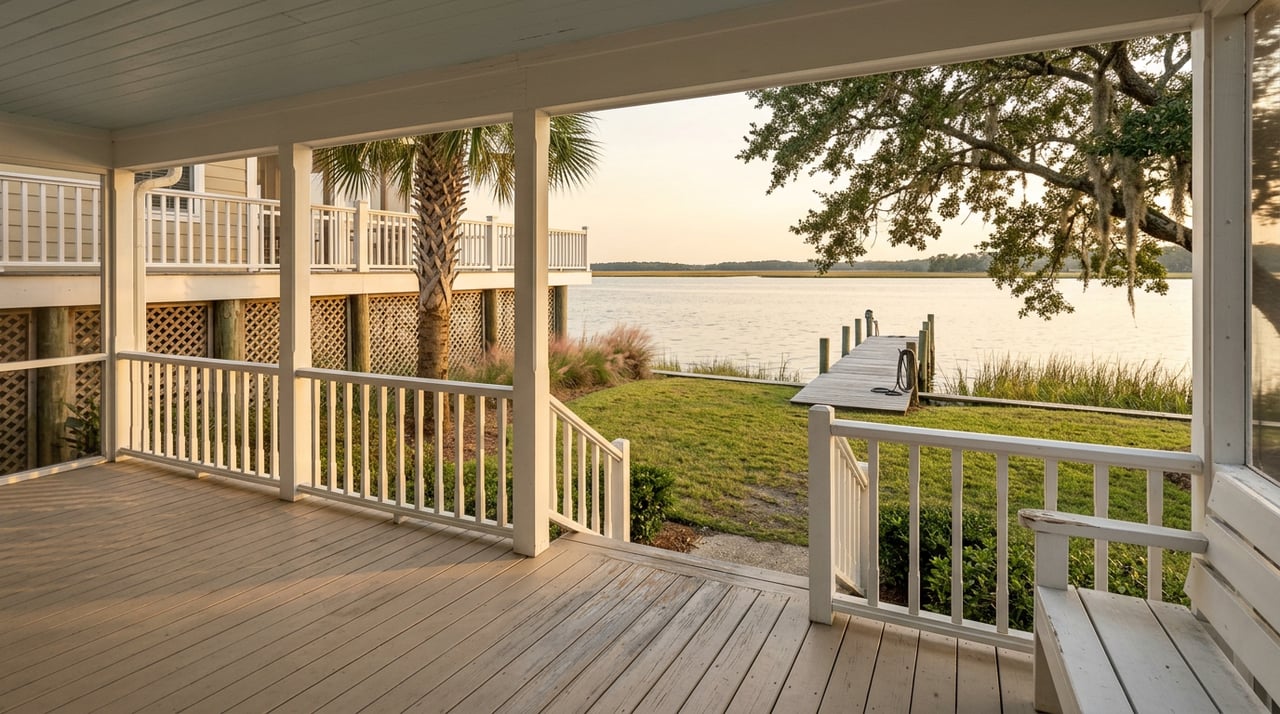
Soundside living is not a lesser version of coastal life. It is a different one. Instead of centering your day around direct beach access, soundside homes often appeal to buyers who value boating, paddling, fishing, and calmer water.
Surf City’s Soundside Park gives a good snapshot of that lifestyle. The park includes an ADA kayak and paddleboard launch, amphitheater, boardwalk and fishing pier, playground, picnic shelters, a public boat ramp, public parking, and restrooms. If you picture mornings on the water and evenings by the sound, this side of the island may feel like the better fit.
Soundside inventory spans a wide range. Research examples include a sound-side lot at 823 S Topsail Dr that last sold near $390,000 and was later estimated at $533,809, a sound-front estimate around $1.07 million for 133 N Oak Dr, and a newer sound-front townhome at 205 N New River Dr that sold for $1.314 million. In other words, soundside can be more accessible at entry level, but prime sound-front homes can still command premium pricing.
Soundside often appeals to buyers who care more about boating access, calmer water, and a lower-surf environment than being steps from the sand. It can also be attractive for longer stays, especially if your idea of waterfront living includes launching a kayak, keeping a boat nearby, or enjoying a quieter rhythm. If your coastal lifestyle is more about the water than the beach crowd, soundside may be the stronger match.
No matter which side of Surf City you choose, coastal ownership comes with extra layers of planning. Surf City notes that flood insurance and many forms of federal financing or assistance depend on NFIP-compliant floodplain management. The town also notes that coastal lots can involve AE or VE flood-zone standards, elevation certificates, CAMA permits, CFOD tree-survey requirements, and stormwater plans.
This is one reason location matters beyond the view. A property that seems simple on the surface may still involve meaningful review for future updates or repairs. Surf City requires permits for construction, renovations, signs, changes of use, and lot clearing, so even modest projects may trigger approvals.
Shoreline protection is also part of the ownership picture. Surf City and the U.S. Army Corps of Engineers continue work tied to long-term beach and dune nourishment along the town’s 6-mile shoreline. According to the town and the USACE draft report, the project is intended to help protect the shoreline from storm damage and sea level rise, with about 6 million cubic yards of initial sand placement and about 1.2 million cubic yards of maintenance renourishment every six years.
For buyers, this does not eliminate coastal risk. It does show that shoreline management is an active part of Surf City’s long-term planning. If you are choosing oceanfront or near-ocean property, that context matters.
Here is a simple way to frame the decision:
| Option | Best for | Price direction | Key tradeoff |
|---|---|---|---|
| Oceanfront | Direct beach access and strongest coastal views | Highest in most cases | More exposure and often more upkeep |
| Second-row | Close beach access with more budget flexibility | Usually below oceanfront | Not directly on the beach |
| Soundside | Boating, paddling, calmer water lifestyle | Wider range from moderate to premium | Less beach-immediate identity |
If you are still deciding, focus on how you will actually use the property. The right home for a few peak-season weekends may not be the right home for month-long stays, future resale goals, or a rental strategy. The more honest you are about your priorities, the easier this choice becomes.
Ask yourself:
For many buyers, the answer is not simply oceanfront or soundside. It is the location that best matches your routine, your budget, and the way you define coastal living.
If you are comparing waterfront options in Surf City and want local guidance on which setting fits your goals, logan sullivan can help you narrow the field and move forward with confidence.
Stay up to date on the latest real estate trends.


For the best service and results when it comes to all of your real estate needs, reach out anytime.